Introduction
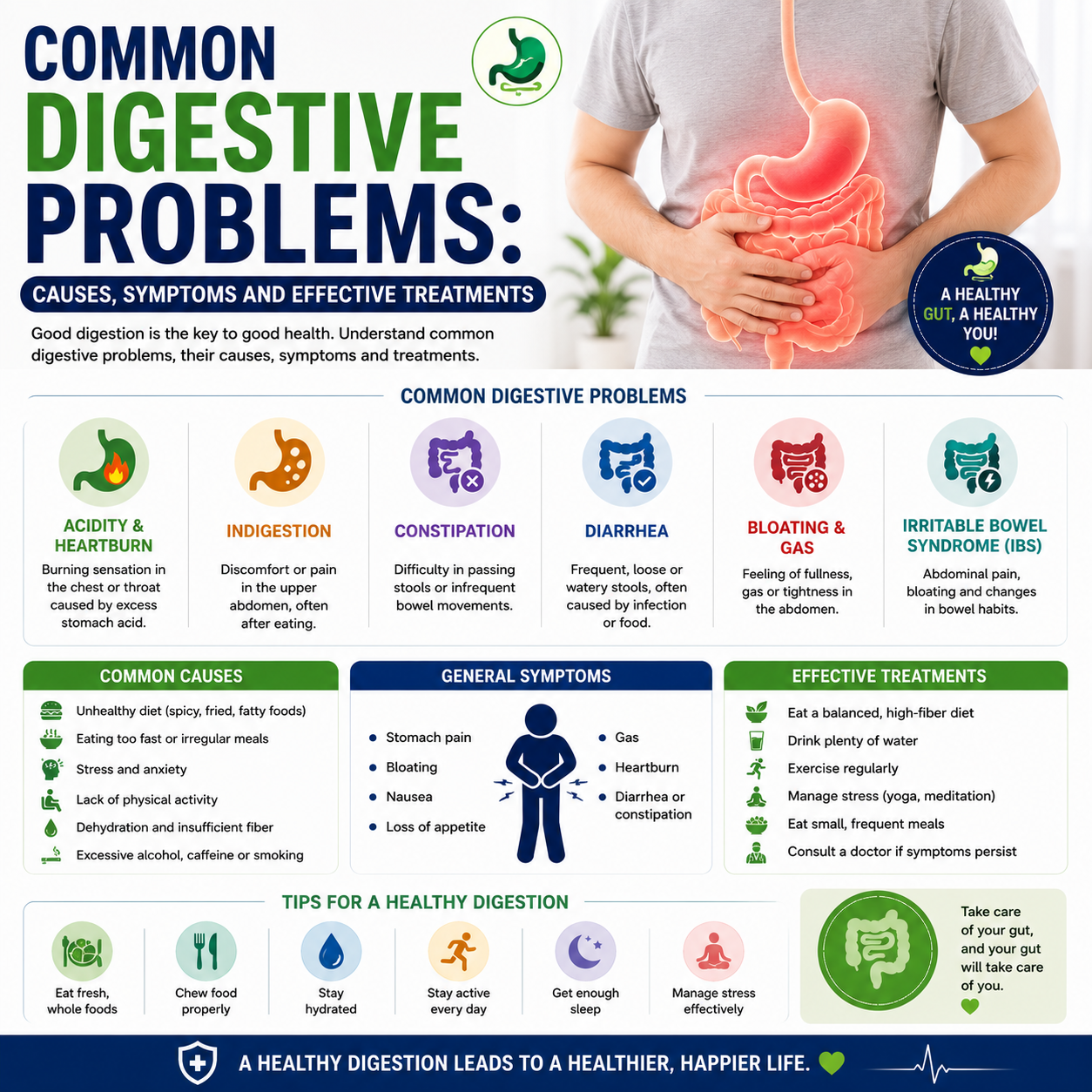
Digestive health plays a crucial role in overall well-being. The digestive system is responsible for breaking down food, absorbing nutrients, and eliminating waste. However, many people experience digestive issues at some point in their lives. These problems can range from mild discomfort to chronic conditions that significantly impact quality of life.
In recent years, digestive problems have become increasingly common due to poor dietary habits, stress, and sedentary lifestyles. Understanding the causes, symptoms, and treatment options is essential for maintaining a healthy gut and overall health.
What Are Digestive Problems?
Digestive problems refer to any condition that affects the gastrointestinal (GI) tract. These conditions can interfere with normal digestion and nutrient absorption.
Common Digestive Disorders
1. Acid Reflux (GERD)
Acid reflux occurs when stomach acid flows back into the esophagus, causing heartburn and discomfort.
2. Constipation
Constipation is characterized by infrequent bowel movements and difficulty passing stool.
3. Bloating
Bloating causes a feeling of fullness or swelling in the abdomen, often due to gas buildup.
4. Irritable Bowel Syndrome (IBS)
IBS is a chronic condition that affects the large intestine, causing symptoms like cramping, diarrhea, and constipation.
Causes of Digestive Problems
Several factors contribute to digestive issues:
- Poor diet (low fiber, high processed food)
- Lack of physical activity
- Stress and anxiety
- Dehydration
- Food intolerances
- Certain medications
Symptoms to Watch For
Common symptoms include:
- Abdominal pain
- Gas and bloating
- Diarrhea or constipation
- Nausea
- Loss of appetite
Persistent symptoms should not be ignored, as they may indicate a more serious condition.
How to Improve Digestive Health
✔ Eat Fiber-Rich Foods
Fiber improves bowel movements and supports gut health. Include:
- Whole grains
- Fruits
- Vegetables
✔ Stay Hydrated
Water aids digestion and prevents constipation.
✔ Exercise Regularly
Physical activity stimulates intestinal movement and improves digestion.
✔ Manage Stress
Stress can disrupt digestion and worsen symptoms.
✔ Avoid Trigger Foods
Spicy, fatty, and processed foods can irritate the digestive system.
Role of Gut Microbiome
The gut microbiome consists of beneficial bacteria that help with digestion and immunity. Maintaining a healthy balance of gut bacteria is essential.
When to See a Doctor
Consult a healthcare professional if you experience:
- Severe abdominal pain
- Blood in stool
- Persistent symptoms
- Unexplained weight loss
Conclusion
Digestive health is essential for overall wellness. By adopting healthy lifestyle habits, managing stress, and seeking medical advice when needed, individuals can maintain a healthy digestive system and improve their quality of life.
digestive problems, gut health, stomach issues, digestion tips
Book Now
For professional medical consultation and personalized healthcare services, visit:
👉 https://signiahealth.org/