Introduction
Diabetes is one of the fastest-growing chronic health conditions worldwide. It affects how the body processes blood sugar (glucose), which is a vital source of energy. When not properly managed, diabetes can lead to serious complications affecting the heart, kidneys, eyes, and nerves.
The good news is that many cases—especially Type 2 diabetes—can be prevented or delayed through lifestyle changes, early detection, and proper management. In this guide, we will explore the early signs, causes, prevention strategies, and management techniques for diabetes.
What is Diabetes?
Diabetes is a condition where the body either does not produce enough insulin or cannot effectively use the insulin it produces. Insulin is a hormone that helps regulate blood sugar levels.
Types of Diabetes
1. Type 1 Diabetes
An autoimmune condition where the body attacks insulin-producing cells. It usually develops in childhood or early adulthood.
2. Type 2 Diabetes
The most common type, often linked to lifestyle factors such as poor diet and lack of exercise.
3. Gestational Diabetes
Occurs during pregnancy and usually resolves after childbirth but increases the risk of future diabetes.
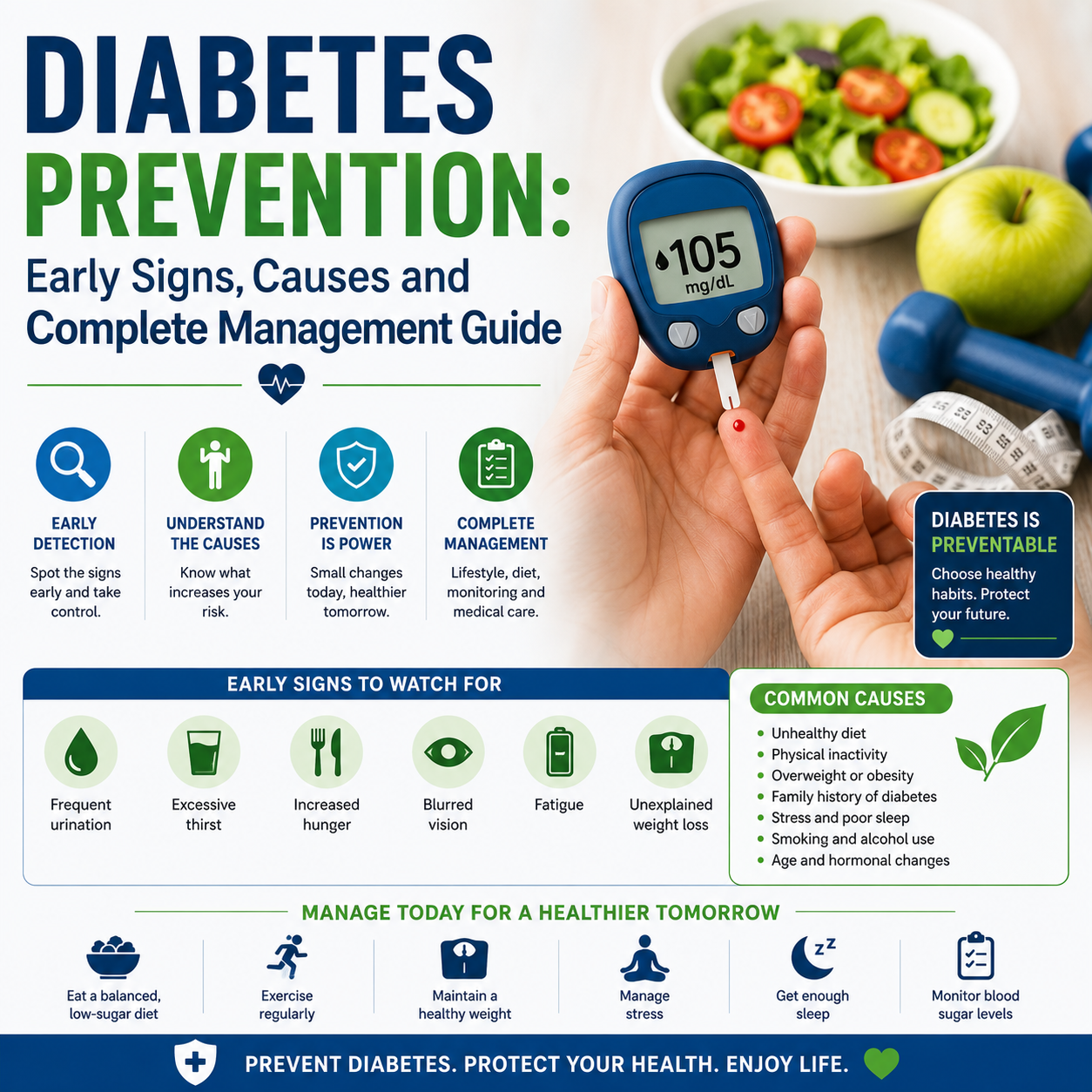
Early Signs and Symptoms
Recognizing early symptoms is essential for timely intervention. Common signs include:
- Frequent urination
- Increased thirst
- Unexplained weight loss
- Fatigue
- Blurred vision
- Slow healing wounds
These symptoms may develop gradually, especially in Type 2 diabetes, making regular checkups important.
Causes and Risk Factors
Several factors contribute to the development of diabetes:
✔ Unhealthy Diet
High intake of sugar, processed foods, and refined carbohydrates increases risk.
✔ Physical Inactivity
A sedentary lifestyle reduces insulin sensitivity.
✔ Obesity
Excess body weight, especially abdominal fat, is strongly linked to diabetes.
✔ Genetics
Family history increases susceptibility.
✔ Age
Risk increases with age, particularly after 40.
Why Diabetes is Dangerous
If left unmanaged, diabetes can lead to serious complications:
- Heart disease
- Kidney failure
- Nerve damage
- Vision problems
- Stroke
This makes early prevention and management critical.
How to Prevent Diabetes
1. Maintain a Healthy Diet
Focus on:
- Whole grains
- Fresh fruits and vegetables
- Lean proteins
- Healthy fats
Avoid sugary drinks and processed foods.
2. Exercise Regularly
Physical activity helps regulate blood sugar levels and improves insulin sensitivity.
3. Maintain Healthy Weight
Losing even a small amount of weight can significantly reduce risk.
4. Monitor Blood Sugar Levels
Regular testing helps detect abnormalities early.
5. Reduce Stress
Chronic stress can affect blood sugar levels and increase risk.
Daily Management Tips
- Eat smaller, balanced meals
- Stay hydrated
- Avoid smoking and alcohol
- Follow a consistent routine
Role of Technology in Diabetes Care
Modern tools such as glucose monitors, fitness apps, and wearable devices help individuals track and manage their condition more effectively.
When to See a Doctor
Consult a healthcare professional if you:
- Notice symptoms of diabetes
- Have a family history
- Are overweight
- Experience persistent fatigue
Early diagnosis can prevent serious complications.
Conclusion
Diabetes is a serious but manageable condition. With the right lifestyle choices, early detection, and proper care, individuals can lead healthy and fulfilling lives. Prevention remains the most effective strategy.
diabetes prevention, blood sugar control, diabetes symptoms, type 2 diabetes
Book Now
For professional medical consultation and personalized healthcare services, visit:
👉 https://signiahealth.org/