Introduction
Heart health is one of the most important aspects of overall well-being. The heart is a vital organ responsible for pumping blood throughout the body, supplying oxygen and nutrients to tissues and organs. However, cardiovascular diseases remain one of the leading causes of death worldwide.
Modern lifestyles, including poor diet, lack of exercise, stress, and smoking, have significantly increased the risk of heart-related conditions. The good news is that many heart diseases can be prevented with proper lifestyle changes and early detection.
What is Heart Disease?
Heart disease refers to a group of conditions affecting the heart and blood vessels. These include:
- Coronary artery disease
- Heart attack
- Heart failure
- Arrhythmias (irregular heartbeat)
Understanding these conditions is essential for prevention and management.
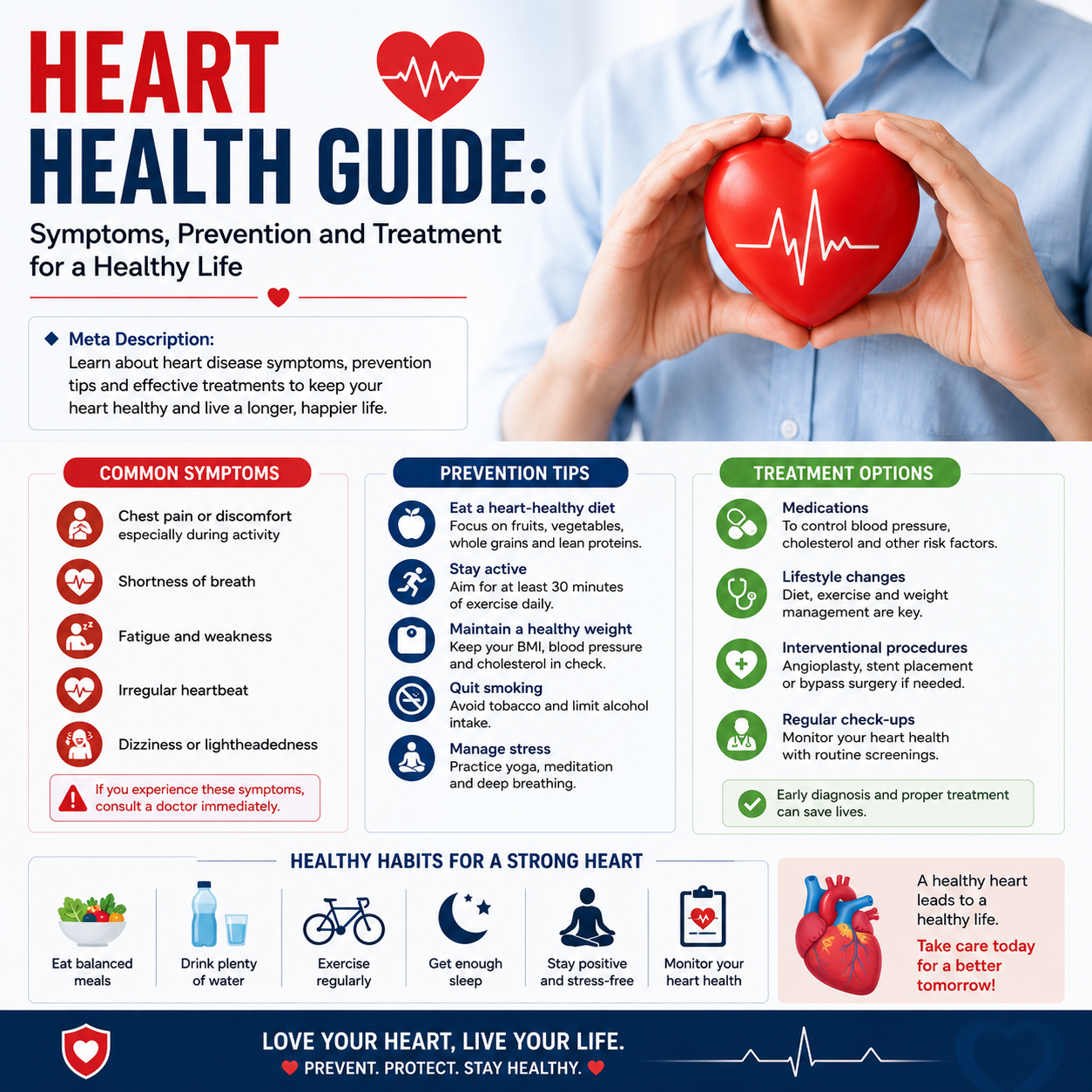
Common Symptoms of Heart Disease
Recognizing early warning signs can save lives. Symptoms may include:
- Chest pain or discomfort
- Shortness of breath
- Fatigue
- Dizziness
- Irregular heartbeat
- Pain in arms, neck, or jaw
Some people may not experience noticeable symptoms until a serious event occurs, making regular checkups important.
Causes and Risk Factors
Several factors increase the risk of heart disease:
✔ Unhealthy Diet
High intake of saturated fats, salt, and processed foods.
✔ Lack of Physical Activity
Sedentary lifestyle weakens heart function.
✔ Smoking
Damages blood vessels and increases risk of heart attack.
✔ High Blood Pressure
Puts extra strain on the heart.
✔ High Cholesterol
Leads to plaque buildup in arteries.
✔ Stress
Chronic stress affects heart health.
✔ Diabetes
Increases risk of cardiovascular disease.
How to Prevent Heart Disease
1. Maintain a Healthy Diet
Eat foods that support heart health:
- Fruits and vegetables
- Whole grains
- Lean proteins
- Healthy fats
Reduce salt, sugar, and processed foods.
2. Exercise Regularly
Engage in at least 30 minutes of moderate activity daily, such as walking, jogging, or cycling.
3. Manage Blood Pressure and Cholesterol
Regular monitoring helps detect problems early.
4. Avoid Smoking
Quitting smoking significantly reduces heart disease risk.
5. Maintain Healthy Weight
Excess weight increases strain on the heart.
6. Manage Stress
Practice relaxation techniques such as meditation and deep breathing.
Role of Regular Checkups
Routine health checkups are essential for early detection of risk factors such as high blood pressure and cholesterol levels. Early intervention can prevent serious complications.
Treatment Options
Treatment depends on the condition and severity:
- Lifestyle changes
- Medications
- Medical procedures (such as angioplasty)
- Surgery in severe cases
Early treatment improves outcomes significantly.
Importance of Lifestyle Changes
Making long-term lifestyle changes is the most effective way to maintain heart health. Even small changes, such as improving diet and increasing physical activity, can have a major impact.
Warning Signs That Require Immediate Attention
Seek urgent medical help if you experience:
- Severe chest pain
- Difficulty breathing
- Sudden weakness or dizziness
These may indicate a heart attack or other serious condition.
Conclusion
Heart health is essential for a long and healthy life. By adopting healthy habits, managing risk factors, and seeking medical advice when needed, individuals can significantly reduce the risk of heart disease and improve overall well-being.
heart health, heart disease symptoms, cardiovascular health, heart prevention
Book Now
For professional medical consultation and personalized healthcare services, visit:
👉 https://signiahealth.org/