Introduction
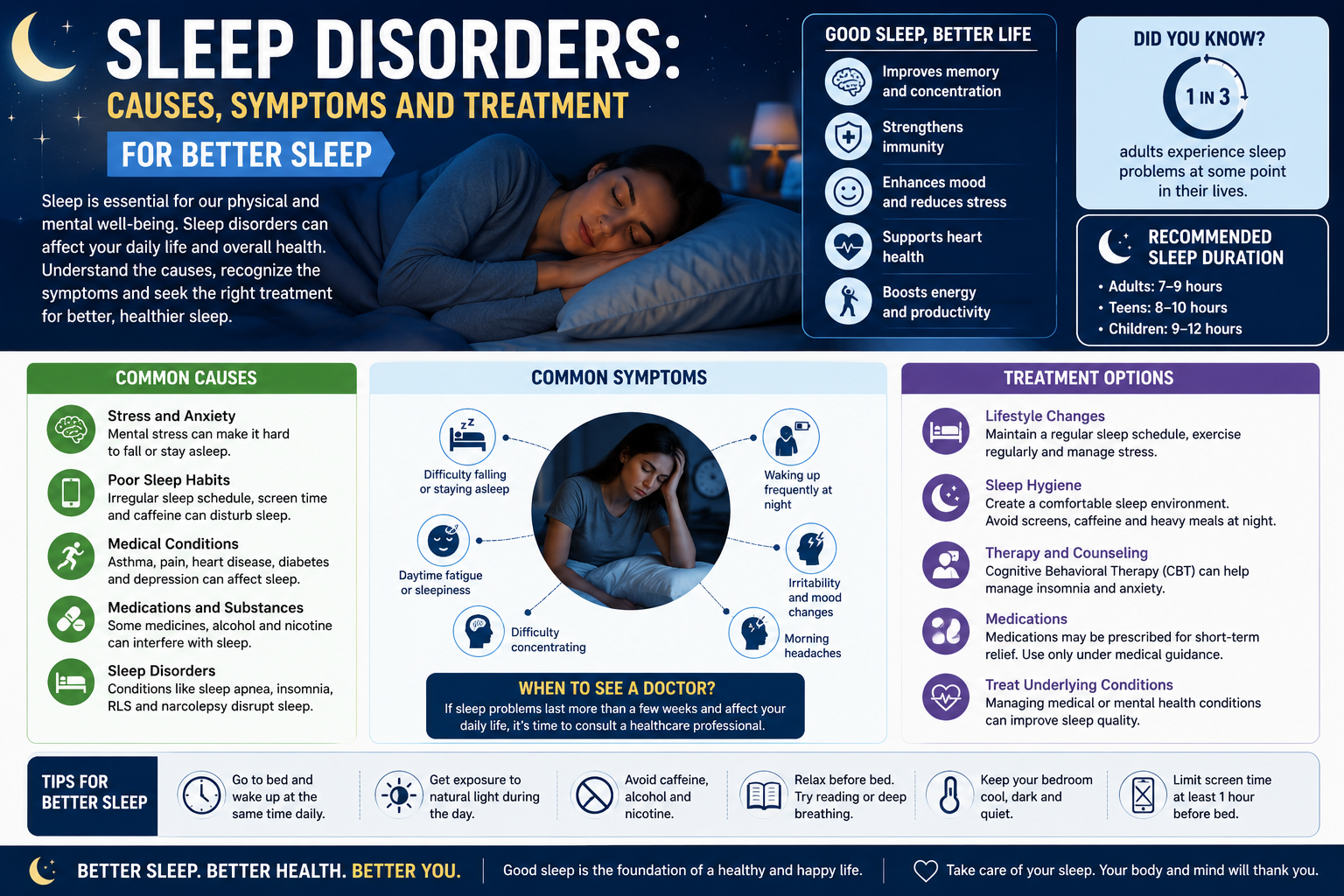
Sleep is a fundamental part of human health, yet many people struggle with sleep-related problems. Sleep disorders can affect physical health, mental well-being, and daily productivity. In today’s fast-paced lifestyle, poor sleep habits, stress, and excessive screen time have made sleep disorders increasingly common.
Understanding the causes, symptoms, and treatment options for sleep disorders is essential for improving overall health and quality of life.
What Are Sleep Disorders?
Sleep disorders are conditions that affect the ability to sleep well on a regular basis. These disorders can lead to insufficient or poor-quality sleep.
Common Types of Sleep Disorders
1. Insomnia
Difficulty falling asleep or staying asleep.
2. Sleep Apnea
A condition where breathing repeatedly stops and starts during sleep.
3. Restless Legs Syndrome
An uncontrollable urge to move the legs, usually at night.
4. Narcolepsy
Excessive daytime sleepiness and sudden sleep attacks.
Causes of Sleep Disorders
Several factors contribute to sleep problems:
✔ Stress and Anxiety
Mental health issues can disrupt sleep patterns.
✔ Poor Sleep Habits
Irregular sleep schedules and excessive screen time.
✔ Medical Conditions
Chronic pain, asthma, and other conditions.
✔ Lifestyle Factors
Caffeine, alcohol, and lack of exercise.
Symptoms of Sleep Disorders
Common symptoms include:
- Difficulty falling asleep
- Frequent waking during the night
- Daytime fatigue
- Lack of concentration
- Irritability
Persistent symptoms should not be ignored.
Effects of Poor Sleep
Lack of proper sleep can lead to:
- Reduced productivity
- Increased stress
- Weakened immune system
- Higher risk of chronic diseases
Sleep is essential for physical recovery and mental clarity.
How to Improve Sleep Quality
1. Maintain a Sleep Schedule
Go to bed and wake up at the same time daily.
2. Create a Relaxing Environment
Ensure your bedroom is quiet, dark, and comfortable.
3. Limit Screen Time
Avoid screens at least 1 hour before bedtime.
4. Avoid Stimulants
Reduce caffeine and alcohol intake.
5. Exercise Regularly
Physical activity promotes better sleep.
6. Practice Relaxation Techniques
Meditation and breathing exercises help calm the mind.
When to See a Doctor
Consult a healthcare professional if:
- Sleep problems persist for weeks
- You experience severe fatigue
- Sleep affects daily activities
Early diagnosis helps in effective treatment.
Treatment Options
- Lifestyle changes
- Cognitive behavioral therapy
- Medications (if prescribed)
- Sleep devices for conditions like sleep apnea
Long-Term Benefits of Good Sleep
- Improved mental health
- Better physical performance
- Stronger immunity
- Enhanced focus and productivity
Conclusion
Sleep is essential for maintaining overall health and well-being. By improving sleep habits and addressing underlying issues, individuals can achieve better sleep quality and lead healthier lives.
sleep disorders, insomnia treatment, sleep health, better sleep tips
Book Now
For professional medical consultation and personalized healthcare services, visit:
👉 https://signiahealth.org/